
The data point that changes the conversation.
El 96% de los marketers B2B ya usa inteligencia artificial en su trabajo diario. Casi la mitad lo considera la tendencia más importante de 2026.
But the missing conversation is not about task automation. It's about something more strategic: what AI makes possible before, during, and after an in-person brand experience.
That is because experiential marketing is not being replaced by technology. It is amplified by it. And that difference completely changes how a B2B activation in 2026 is designed, executed, and measured.
Before the event: personalization that turns attendance into anticipation.
The most common error in B2B events is treating the attendance like logistics. A generic invitation, a massive email, and a calendar reminder.
AI allows something different: Segmenting the turnout by decision-maker profile, personalizing the message based on their interaction history with the brand, and creating differentiated anticipation for each type of attendee — the CMO, the Trade Director, the Purchasing Manager.
The result is not just a higher confirmation rate. It is an attendee who arrives at the event with context, specific expectations, and an already cultivated emotional predisposition.
During the event: Real-time data that allows live adjustments.
Traditionally, event feedback arrived after the fact — in surveys that few completed and reports that arrived weeks late.
Today, real-time analytics tools allow for something that was previously impossible: knowing during the event what is working and what is not. Which zone has the highest traffic. Which activation generates the longest dwell time. Which moment of the program drives the highest social media engagement.
This information, processed in real time, allows for adjustments on the fly — changing the order of a presentation, reinforcing an activation that is working, or redirecting resources to where the impact is greatest.
An event instrumented with real-time data is not the same as an event operated blindly.
After the event: one moment that feeds six months of strategy
This is the most important change — and the least leveraged.
A well-designed event generates content, first-party data, testimonials, visual moments, and behavioral signals that can feed the brand strategy for months.
AI makes it possible to process that volume of information at a speed that was previously humanly impossible: identifying the most shared moments on social media, generating content variations for different channels, personalizing the post-event follow-up by attendee segment, and measuring the brand recall lift at 30, 60, and 90 days.
The event stops being an isolated moment. It becomes the central asset of a content, community, and pipeline strategy that keeps working long after the lights have gone out.
The new standard: experiential like infrastructure, not a campaign
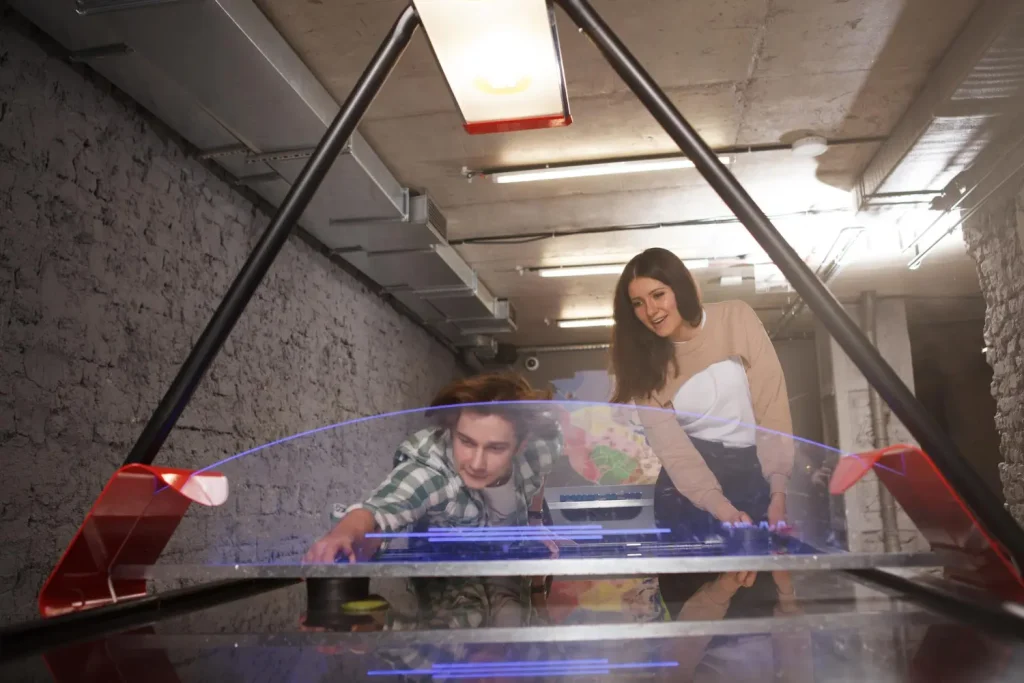
Experiential marketing works in 2026 when it behaves like infrastructure — not like a one-night-only theater performance.
That means designing every activation with three simultaneous horizons in mind: what happens before to maximize attendance and predisposition, what happens during to generate the greatest possible impact in the shortest time, and what happens after to convert that impact into pipeline, community, and brand recall.
AI does not replace any of those three horizons. It connects them. It makes them more precise. And it scales them to a reach that no human team could manage alone."
The gap that still exists — and where the opportunity lies
78% of B2B marketers already allocate budget to experiential marketing. However, less than 30% rate their efforts as established, advanced, or leading. The rest are in an exploratory or developing stage.
That gap is not in the budget. It is in strategic design.
The organizations that are winning are not necessarily the ones with the most resources — they are the ones designing their experiences with intention, with data, and with an architecture that coherently connects the in-person with the digital.
What this means for a B2B CMO in LATAM
In markets like Colombia, Mexico, Brazil, and the Caribbean, where trust is built in person and relationships precede transactions, experiential marketing is not optional. It is the most efficient channel for transferring brand credibility to the buyer.
AI does not change that cultural reality. It enhances it.
A well-designed, well-instrumented, and well-amplified event does not compete with digital advertising — it surpasses it in depth of impact, in the quality of leads generated, and in the speed of building trust.
At Penta, we design and execute brand experiences for B2B companies across 14 countries — activations, corporate events, incentive programs, and cultural experiences that combine in-person execution with digital architecture. Because the future of experiential marketing is not about choosing between the physical and the technological. It is knowing how to make both work together.
Let's talk at PentaMarketingAgency.com